

Introduction
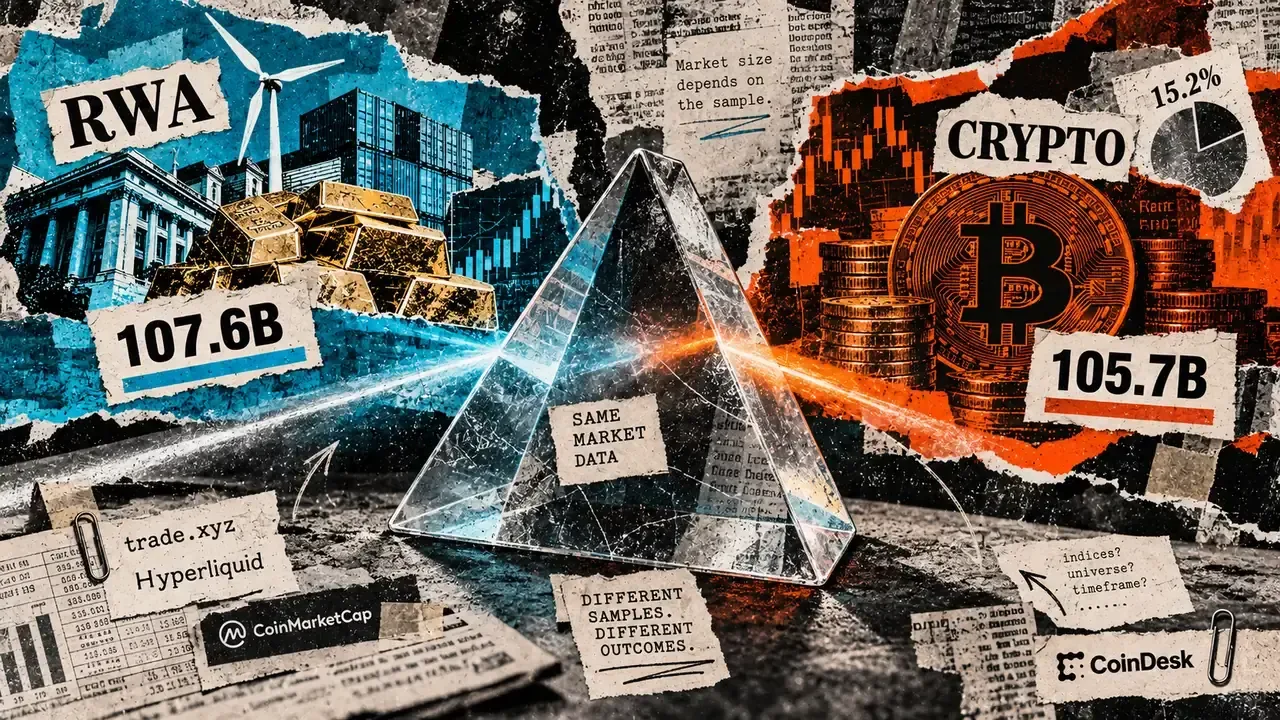
The cryptocurrency landscape has been abuzz with headlines claiming that Real-World Asset (RWA) futures have "overtaken" traditional crypto derivatives. A headline figure of $107.6 billion in crossover trading on selected venues has been cited as evidence of a seismic shift. However, a deeper look at the data reveals a far more nuanced picture. When compared with CoinDesk’s comprehensive CEX derivatives total, that impressive sum shrinks to roughly 15.2% of the overall market, effectively ignoring more than 90% of trading activity. This analysis dissects the numbers, highlights the methodological pitfalls, and assesses what the trend truly means for investors and market participants.
Key Takeaways
- The $107.6 billion figure represents a narrow subset of venues and does not reflect the full derivatives ecosystem.
- When measured against the broader CEX derivatives market, RWA futures account for only about 15.2% of total volume.
- The apparent "overtake" is largely an artifact of selective sampling, not a genuine market dominance.
- Traditional assets like Bitcoin and Ethereum remain the primary drivers of derivatives liquidity.
- Regulatory clarity and institutional adoption will be critical for RWA futures to achieve sustainable growth.
Market Impact Analysis
From a short‑term perspective, the headline numbers can create a perception of rapid adoption, potentially influencing sentiment and prompting speculative interest in RWA products. However, the underlying data suggests that the impact on major cryptocurrencies such as Bitcoin (BTC) and Ethereum (ETH) remains neutral. Altcoins, which constitute a sizable portion of the overall derivatives market, are likewise unaffected by this narrow crossover.
Looking ahead, the long‑term implications hinge on whether RWA platforms can expand beyond the current limited venues and integrate with the broader CEX infrastructure. If that integration fails, RWA futures will continue to occupy a peripheral position, representing a niche rather than a mainstream force. Consequently, the market impact is assessed as neutral across both short‑term sentiment and long‑term structural change.
Outlook
Investors should treat the $107.6 billion claim with caution. A comprehensive view of derivatives activity—incorporating all centralized and decentralized venues—is essential before drawing conclusions about market dynamics. Regulators and industry participants would be wise to focus on transparency and standardized reporting to ensure that future growth metrics reflect genuine adoption rather than sampling bias.
In summary, while RWA futures have generated excitement, they have not truly overtaken the crypto derivatives space. The data underscores the importance of holistic analysis and cautions against over‑interpreting selective figures. As the ecosystem matures, broader participation and integrated liquidity will determine whether RWA can transition from a promising niche to a core component of the crypto market.
Market context
Market data reflects conditions at publication time and is not updated in real time.
Data captured at: Sep 19, 2026 16:09 (Tehran)
Likely market impact
| Segment | Outlook |
|---|---|
| Bitcoin | ● Neutral |
| Ethereum | ● Neutral |
| Altcoins | ● Neutral |
| Short term | ● Neutral |
| Long term | ● Neutral |
Spot prices at publication
Fear & Greed Index
Source: CryptoSlate