

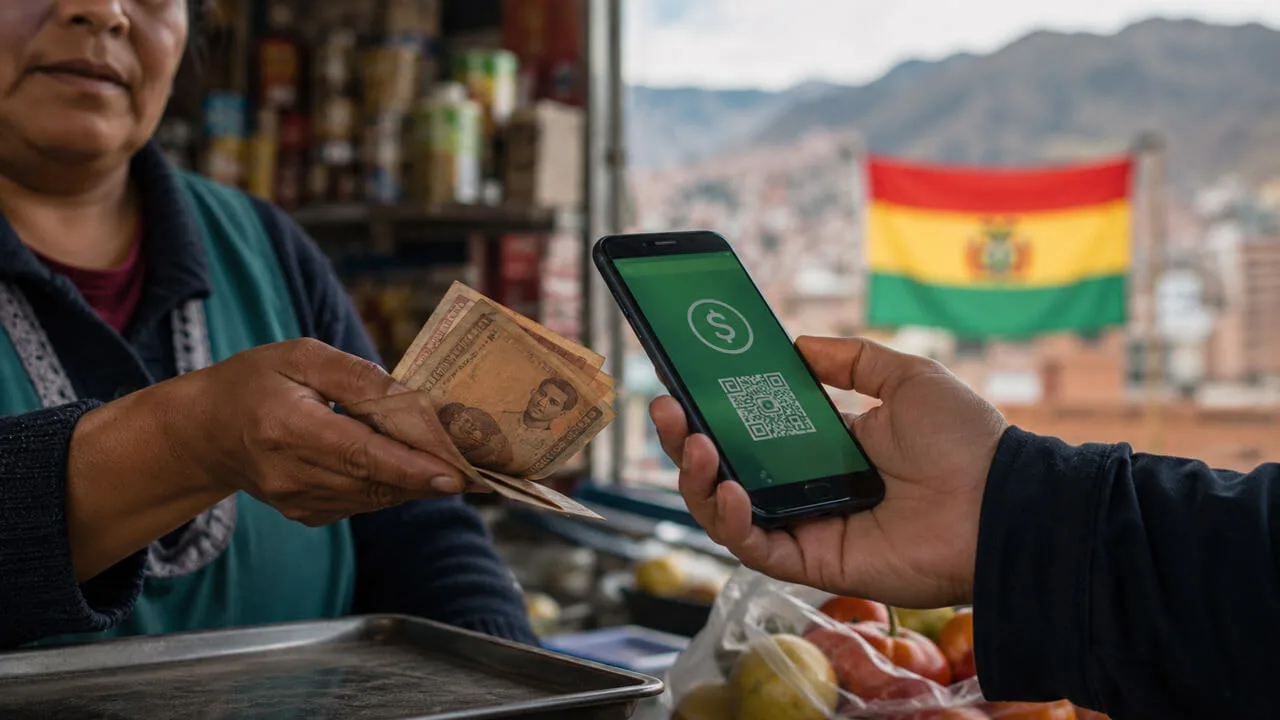
Introduction: The Rise of Private Digital Dollarization
In an era of increasing monetary fragmentation, stablecoins are emerging as unofficial currencies in economies under pressure. Nations like Bolivia and Nigeria are witnessing a rapid shift toward dollar-denominated digital assets such as USDT, driven by currency instability, foreign exchange constraints, and regulatory ambiguity. This growing reliance on stablecoins is not just a financial workaround—it's a systemic evolution that challenges traditional monetary frameworks.
Key Developments in Bolivia and Nigeria
- Bolivia is evaluating the inclusion of USDT in its regulated payment system, despite lacking legal tender status.
- Nigeria’s citizens have turned to dollar-stablecoins due to naira depreciation and limited access to foreign exchange.
- Cryptoasset transaction volumes in Bolivia surged over 630% year-over-year, reaching $430 million.
- Nigeria received $59 billion in crypto inflows from July 2023 to June 2024, representing 60% of sub-Saharan Africa’s total stablecoin inflows since 2019.
Market Impact Analysis
The adoption of stablecoins in response to local monetary stress reveals a new model of 'stealth dollarization'—a phenomenon identified by the Bank for International Settlements (BIS). In emerging markets, stablecoins offer a fast, accessible alternative to volatile local currencies, especially when capital controls or inflation erode confidence in domestic money. As users increasingly denominate savings and transactions in USD-pegged tokens, central banks risk losing control over monetary policy transmission and financial intermediation. Banks face deposit outflows as individuals opt for interest-bearing or perceived safer stablecoin holdings, undermining traditional credit creation mechanisms.
Regulatory Challenges and Policy Consequences
Attempts to suppress crypto activity often backfire, pushing usage into peer-to-peer networks and reducing regulatory oversight. Nigeria's 2021 banking restrictions illustrate this dynamic, with crypto flows migrating off formal platforms but continuing through informal channels. Once stablecoin usage reaches critical mass, governments find themselves in reactive positions, forced to legitimize behaviors they did not initiate. This creates a paradox: while policymakers aim to maintain sovereignty, their delayed responses may inadvertently cede monetary influence to private issuers like Tether, whose reserve policies and blockchain decisions shape economic outcomes beyond national borders.
Global Outlook and Risks Ahead
As more countries integrate stablecoins into daily commerce, the implications extend beyond individual economies. Central banks must grapple with weakened monetary tools, reduced effectiveness of capital controls, and exposure to external governance risks tied to private stablecoin operators. With Tether alone managing over $183 billion in liabilities backed significantly by U.S. Treasuries, the balance sheet of a single private entity now rivals those of small sovereign states. The next currency crisis could accelerate this trend, transforming hundreds of billions in stablecoins into quasi-national currencies—challenging both regulators and global financial stability.
Market context
Market data reflects conditions at publication time and is not updated in real time.
Data captured at: Sep 18, 2026 01:05 (Tehran)
Likely market impact
| Segment | Outlook |
|---|---|
| Bitcoin | ● Neutral |
| Ethereum | ● Neutral |
| Altcoins | ▲ Positive |
| Short term | ▲ Bullish |
| Long term | ▲ Positive |
Spot prices at publication
Fear & Greed Index
Chart
Source: CryptoSlate