

Introduction: A Rally Built on Thin Ice
Bitcoin's ascent beyond the $80,000 threshold has captured headlines across the financial world, yet a closer examination of institutional positioning data reveals a rally that may be far more fragile than its price chart suggests. While retail enthusiasm and leveraged traders have fueled the momentum, the deeper structural pillars of institutional conviction appear to be weakening — a concerning signal for the sustainability of this upward move.
Key Market Dynamics Behind the Rally
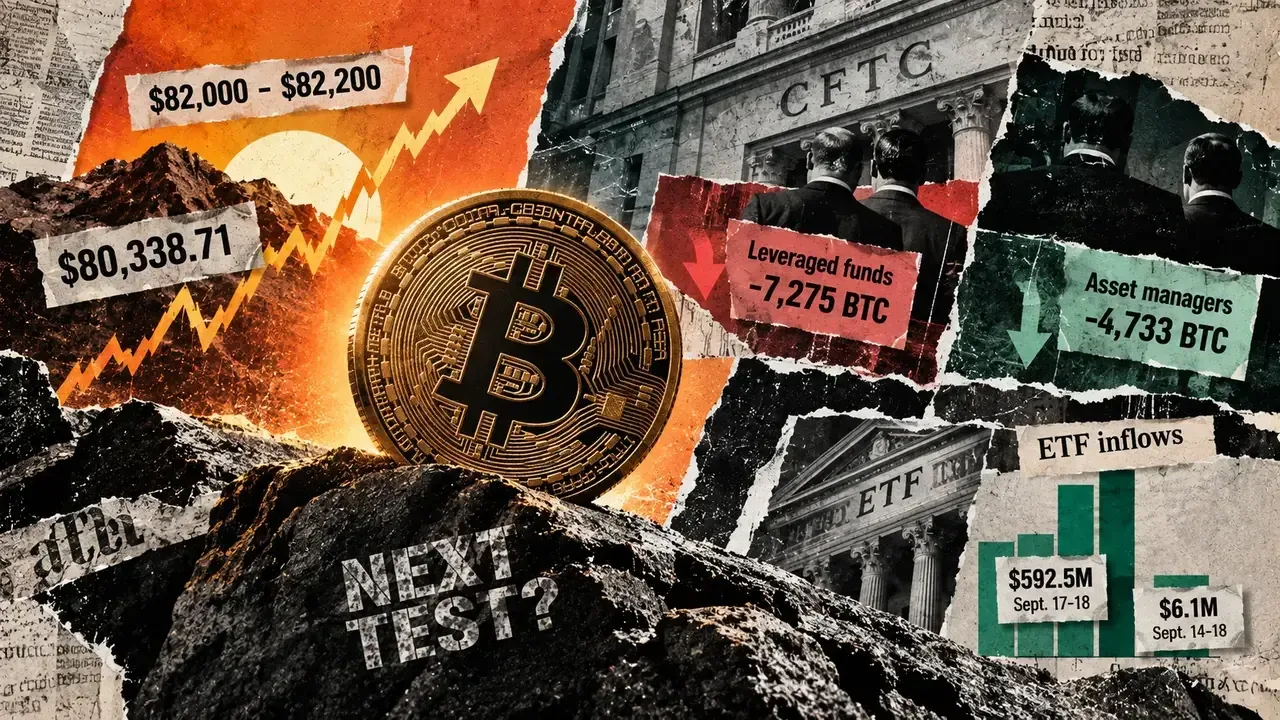
Recent data from derivatives markets and ETF flows paints a nuanced and troubling picture. Leveraged funds reduced their net short exposure by approximately 7,275 BTC-equivalent, indicating that speculative traders have been unwinding bearish bets rather than establishing fresh bullish conviction. Meanwhile, asset managers — the cohort widely regarded as the backbone of long-term institutional demand — saw their long positions decline. This divergence between leveraged speculation and genuine institutional accumulation is a red flag that experienced market participants are unlikely to ignore.
Perhaps most alarmingly, weekly ETF demand barely remained positive during this rally period. Exchange-traded funds have been the primary conduit for institutional capital entering the Bitcoin ecosystem, and when that flow slows to a trickle, it suggests that the traditional finance world is not yet prepared to validate this price level as fundamentally justified.
Market Impact Analysis
The current market structure reveals a dangerous reliance on leveraged positioning rather than organic, conviction-driven buying. When rallies are propelled primarily by short squeezes and speculative leverage rather than sustained institutional inflows, they become inherently vulnerable to sharp reversals. The modest ETF inflows indicate that institutional allocators are adopting a wait-and-see approach, possibly reassessing macroeconomic conditions or awaiting clearer regulatory signals before committing significant capital at these levels.
The decline in asset-manager longs is particularly significant because this group typically represents the more sophisticated, longer-horizon capital that provides stability during periods of volatility. Their retreat suggests that professional money managers may view the $80,000 level as overextended relative to current fundamentals, or they may be rotating capital elsewhere in anticipation of more favorable entry points.
Outlook: What Comes Next for Bitcoin
Looking ahead, Bitcoin's price trajectory will likely depend on whether institutional flows can reaccelerate in the coming weeks. If ETF demand remains tepid and asset-manager positioning continues to erode, the current price levels may prove difficult to sustain without a significant catalyst. Conversely, a resurgence in institutional buying — potentially triggered by macroeconomic shifts, regulatory clarity, or fresh ETF product launches — could provide the genuine conviction needed to transform this speculative rally into a durable bull market.
Traders and investors should closely monitor the divergence between leveraged fund activity and asset-manager positioning. A scenario where leverage continues to build while institutional demand stagnates has historically preceded significant corrections. Prudent risk management and a disciplined approach to position sizing remain essential in this environment.
Market context
Market data reflects conditions at publication time and is not updated in real time.
Data captured at: Sep 20, 2026 13:57 (Tehran)
Likely market impact
| Segment | Outlook |
|---|---|
| Bitcoin | ▼ Negative |
| Ethereum | ● Neutral |
| Altcoins | ● Neutral |
| Short term | ▼ Negative |
| Long term | ▼ Negative |
Spot prices at publication
Fear & Greed Index
Chart
Source: CryptoSlate